Too Much of a Good Thing: When Aromatherapy Practitioners Lose Their Relationship With Scent
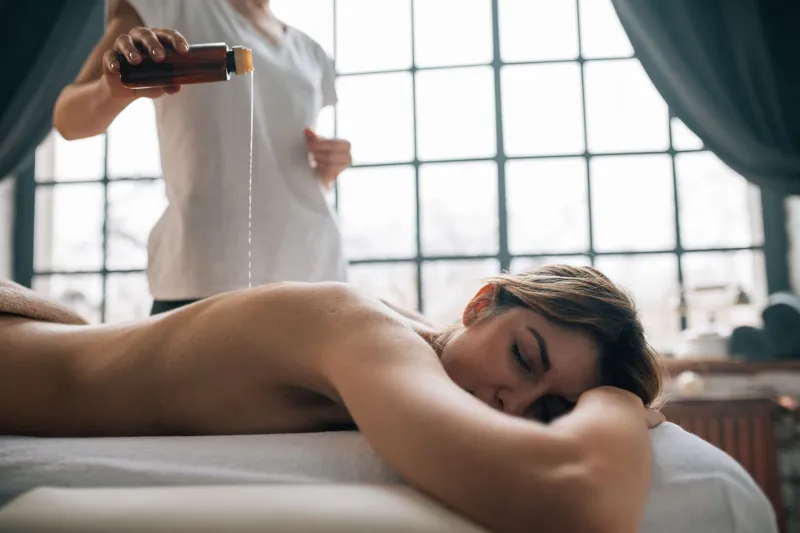
Imagine spending years guiding clients through transformative healing experiences — watching someone's shoulders drop, their breathing slow, their face soften — all because of a carefully chosen blend of essential oils. Now imagine waking up one morning and realizing you can barely smell any of it anymore.
For a surprising number of aromatherapy practitioners, massage therapists, and spa professionals across the US, that scenario isn't hypothetical. It's Tuesday.
The phenomenon has a few names in professional circles: scent fatigue, olfactory adaptation, or — in more severe cases — occupational anosmia. Whatever you call it, the experience is the same. The lavender that once felt like a warm hug? Flat. The eucalyptus that used to snap you awake? Nothing. The bergamot you've diffused a thousand times? You're honestly not sure it's even on.
It's one of the stranger paradoxes in wellness work, and it deserves a real conversation.
What's Actually Happening in Your Brain
Your sense of smell is one of the most emotionally wired systems in your entire body. The olfactory nerve connects almost directly to the limbic system — the brain's emotional and memory hub — which is exactly why scent can trigger such immediate, visceral responses. It's also why aromatherapy works at all.
But that same system has a built-in survival mechanism: habituation. When your brain detects the same stimulus repeatedly without any meaningful change in context, it starts tuning it out. This isn't a flaw. It's efficient neurological housekeeping. Your brain essentially decides, "I've catalogued this. It's not new information. Moving on."
For someone who diffuses lavender occasionally at home, this process is slow and largely inconsequential. For a practitioner who works eight-hour shifts surrounded by therapeutic-grade oils, five days a week, the timeline accelerates dramatically. The brain gets ahead of the scent. And over time, what once felt like a sensory experience starts feeling like background noise.
In more extreme cases — particularly for professionals working in enclosed spaces with high oil concentrations — the adaptation can become semi-permanent, at least without deliberate intervention.
The Part Nobody Talks About
Here's what makes this especially complicated: scent fatigue doesn't just affect job performance. It affects the practitioner's own wellness.
Many people enter the aromatherapy field because these scents genuinely helped them. They discovered lavender during a rough patch with anxiety. Frankincense got them through grief. Peppermint became a daily ritual that sharpened their focus and made mornings feel manageable. These aren't just professional tools — they're personal anchors.
When those anchors stop working, it can feel disorienting in a way that goes beyond the professional. Some practitioners describe a vague sense of loss. Others notice their own stress levels creeping up, unable to reach for the coping tool they'd relied on for years.
And because the wellness industry often projects an image of practitioners as perpetually balanced and radiant, admitting that your lavender isn't landing anymore can feel oddly shameful — like you've somehow failed at your own specialty.
You haven't. You've just hit a neurological ceiling that anyone would hit under the same conditions.
What Industry Veterans Are Actually Doing
Practitioners who've been in the field long enough to hit this wall — and come out the other side — tend to share a few common strategies.
Intentional scent breaks. This sounds obvious, but it requires real discipline. Some therapists designate certain days as "scent-free" where they avoid all essential oils, including personal fragrance and scented products. Giving the olfactory system genuine downtime — even just 24 to 48 hours — can restore a surprising amount of sensitivity.
Rotating their personal toolkit. Professionals often separate the oils they use professionally from the ones they use for personal self-care. If eucalyptus is in every treatment room, it gets retired from the home diffuser entirely. Keeping personal scents completely distinct from work scents preserves their emotional potency.
The coffee bean reset. You've probably seen jars of coffee beans at fragrance counters in department stores. The idea — that sniffing coffee beans "cleanses" the palate between scents — is actually somewhat debated in research, but many practitioners swear by a modified version: simply stepping outside into fresh, neutral air for a few minutes between sessions. The goal is the same: giving the brain a sensory reset before re-engaging with therapeutic oils.
Exploring unfamiliar scents. When your most-used oils stop registering, sometimes the answer is novelty. Trying a completely new oil — one you've rarely or never worked with — can re-engage the olfactory system in a way that familiar scents no longer can. Some practitioners use this as an opportunity to expand their professional repertoire while simultaneously waking their noses back up.
Working with a colleague or supervisor. Having someone else assess a blend or treatment room for scent intensity can be invaluable when your own perception is compromised. A fresh nose catches what a fatigued one misses — and it's a genuinely useful quality-control strategy.
The Environmental Factor
It's also worth acknowledging that not all spa environments are created equal when it comes to olfactory health. Ventilation matters enormously. A treatment room with poor airflow concentrates essential oil molecules in ways that accelerate adaptation and — in some cases — can cause headaches, respiratory irritation, or other low-grade symptoms that practitioners often chalk up to general fatigue.
If you're managing or working in a facility, this is worth a hard look. Proper ventilation, reasonable diffuser run times, and scheduled breaks aren't just comfort considerations — they're occupational health basics.
Keeping the Magic Alive
For anyone building a long-term career in this field, the relationship with scent needs to be treated as something worth protecting, not just something to leverage. That means being intentional about exposure, honest about when fatigue is setting in, and willing to make adjustments before the problem becomes entrenched.
The oils that drew you to this work still have power. Your nervous system just needs the right conditions to access it.
Taking a step back isn't giving up on aromatherapy. It's taking care of the most important tool in your practice — your own ability to experience and share what makes this work meaningful in the first place.
Breathe deep. But also, sometimes — just breathe.