When Lavender Makes You Anxious: Understanding Scent Triggers and Building an Aromatherapy Practice That Feels Safe
The Lavender Problem Nobody Talks About
You've seen it everywhere. Lavender sachets, lavender pillow sprays, lavender everything. The wellness industry has essentially declared it the universal off-switch for stress. So why does walking into a lavender-heavy spa make some people feel worse, not better?
It's not an allergy. It's not a quirk. It's your nervous system doing exactly what it was designed to do — and once you understand why, you can actually work with it instead of fighting it.
How Scent Becomes a Memory, Then a Trigger
Smell is the only sense with a direct line to the amygdala, the part of your brain that processes fear and emotional memory. This is why scent-triggered memories are so visceral — they don't come with the soft edges that visual memories have. They arrive fast, whole, and loaded with feeling.
For most people, lavender smells like calm because they've encountered it in calm contexts: a spa, a grandmother's linen closet, a gentle bedtime routine. The brain has filed it under safe.
But scent doesn't come pre-labeled. If lavender was the air freshener in a hospital room where something terrible happened, or the perfume worn by someone who hurt you, or the smell you associate with a period of your life that was deeply painful — your brain has filed it under something else entirely. And no amount of knowing intellectually that lavender is "supposed" to be relaxing will override that filing system.
This is called conditioned olfactory association, and it's not a trauma response in the clinical sense — it's a normal learning mechanism that happens to have attached itself to something painful.
The Nervous System Doesn't Negotiate
Here's the frustrating part: you can't think your way out of a scent trigger. The signal travels too fast. By the time your rational brain is processing oh, this is just lavender oil, your amygdala has already sounded the alarm, your cortisol has already started rising, and your heart rate has already ticked up.
This is why some people walk into a beautifully designed aromatherapy space and feel immediately worse instead of better. It has nothing to do with the quality of the oils, the skill of the practitioner, or the person's openness to wellness. It has everything to do with what their nervous system learned before they walked in the door.
Common scent triggers people don't always recognize:
- Floral scents (rose, jasmine, ylang ylang) associated with funerals or grief
- Eucalyptus or menthol linked to illness, hospitals, or childhood sickness
- Vanilla or baked goods connected to difficult family dynamics around food
- Sandalwood or incense tied to religious experiences that felt unsafe or coercive
- Clean, soapy scents associated with experiences of powerlessness or institutional settings
None of these associations are irrational. They're just memories your nose is keeping for you.
How to Figure Out What's Actually Triggering You
The tricky thing about scent triggers is that they often don't announce themselves clearly. You might just feel vaguely uneasy, irritable, or suddenly exhausted without connecting it to the diffuser running in the corner.
A few ways to start mapping your own scent landscape:
Keep a simple log. For two weeks, note how you feel when you encounter different scents — at home, in stores, in other people's spaces. Don't try to analyze it. Just write down the scent and a one-word description of your gut reaction.
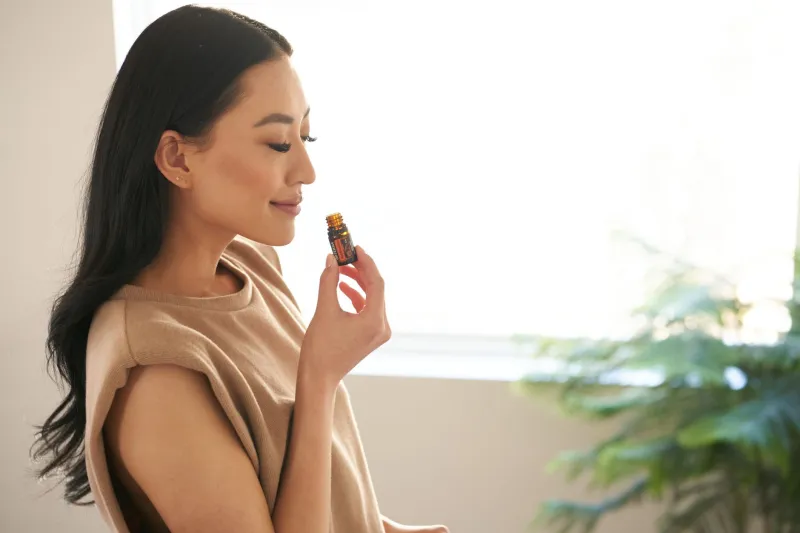
Go slow with new oils. When trying something unfamiliar, do a brief sniff test from the bottle before committing to a full diffuser session. Give yourself thirty seconds to notice what, if anything, surfaces emotionally.
Trust the 'no.' If a scent makes you feel bad, you don't need a reason. You don't need to explain it to your wellness practitioner or justify it to yourself. "This doesn't feel good" is enough.
Notice the body, not just the mind. Scent triggers often show up as physical sensations before thoughts. A tightening in the chest, a sudden headache, an urge to leave the room — these are data points.
Building an Aromatherapy Practice That's Actually Yours
The good news is that scent associations can shift over time with intentional exposure. The not-so-good news is that this process can't be rushed, and it shouldn't be done alone if the underlying associations are connected to significant trauma.
For most people, though, the solution is simpler: stop trying to use the oils you're supposed to love, and start building a collection around what actually feels good to you.
Start with scents that have no history. Unusual aromatics like helichrysum, fragonia, or black spruce are less likely to carry pre-loaded associations for most people. They can be genuinely neutral ground.
Rebuild associations intentionally. If you want to eventually work with a scent that currently feels charged, pair tiny amounts of it with experiences that feel safe and pleasant — a warm bath, a good book, a quiet Sunday morning. Over time, the brain can layer new associations on top of old ones.
Tell your practitioner. A good aromatherapy professional will always ask about your preferences and history before selecting a blend. If they don't ask — ask them to ask. Your comfort is not an inconvenience; it's the whole point.
You're Not the Problem
The wellness world sometimes implies that if you're not relaxed by the things that are supposed to relax you, something is wrong with you. There's nothing wrong with you. Your nervous system is doing its job.
Aromatherapy, done right, is a deeply personal practice — not a one-size-fits-all prescription. The most therapeutic thing you can do is honor what your body actually tells you, rather than what the lavender-industrial complex insists you should feel.
Your safe scent might be cedar. It might be grapefruit. It might be something you haven't found yet. That's the whole point of exploration — and it's worth taking the time to get it right.