It's Not Just the Oil: Why Spa Aromatherapy Hits Different Than Your Home Routine
Here's a scenario a lot of people find themselves in: You book a $180 aromatherapy massage at a spa. You float out an hour later feeling like a new person. A few days after, you pull out your own bottle of lavender essential oil at home, diffuse it in your bedroom, and... nothing. Maybe a faint pleasant smell. Maybe a little relaxation. But nothing close to what you felt on that table.
So what gives? Is the spa using some premium, mystical version of lavender that your Amazon order can't compete with? Are the therapists trained in some ancient art of scent application that you simply don't have access to?
Not exactly. The truth is more interesting — and honestly, a little humbling about how our brains actually work.
The Oil Is Just One Ingredient
When most people think about why a spa aromatherapy treatment feels so powerful, they assume the essential oil is doing the bulk of the work. That makes sense on the surface — the whole thing is called aromatherapy, after all. But researchers who study sensory experience and psychophysiology have been pointing to a more complicated picture for years.
The scent itself is a trigger. But what it triggers depends enormously on context. Your nervous system doesn't just process smell in isolation. It processes smell plus environment, plus expectation, plus physical touch, plus the meaning you've already assigned to the whole experience before you even walked through the door.
Strip any one of those elements away, and the response changes. Sometimes dramatically.
What Your Brain Does Before You Even Smell Anything
Let's talk about expectation for a second, because it's doing a lot of heavy lifting here.
When you book a spa appointment, you've already begun the process of relaxation — sometimes days in advance. You've mentally set aside that time. You've told yourself this is for your wellbeing. You show up having already decided, on some level, that something restorative is about to happen.
Neuroscientists call this predictive coding. Your brain is constantly building models of what's about to occur, and those models shape how you actually experience reality. By the time you're lying on that warm table and the therapist introduces a blend of lavender and eucalyptus, your nervous system has already begun downshifting. The scent confirms what your brain already expected — and the whole system responds accordingly.
At home, you're usually diffusing oil while also checking your phone, half-listening to a podcast, or mentally running through your to-do list. Your brain isn't in prediction mode for relaxation. It's just... Tuesday.
The Environment Is Doing More Work Than You Think
Spas are engineered for a specific sensory experience, and they're pretty good at it. Dim lighting signals your nervous system to reduce cortisol. Warm ambient temperatures relax muscle tissue before anyone even touches you. Soft background sound — whether it's nature recordings or low instrumental music — shifts your brainwave activity toward the calmer end of the spectrum.
Then the scent enters the picture. And because every other sensory input is already pointing in the same direction, the aromatic compounds in the oil get a running start.
At home, your environment is working against you more often than not. Overhead lighting, background noise from the street or your household, the visual clutter of everyday life — all of it keeps your brain in a mild state of alertness. That's not a character flaw. It's just how we're wired to respond to our surroundings.
Touch Changes Everything
This one is huge and consistently underestimated. In most professional spa aromatherapy treatments, the oils aren't just diffused into the air — they're applied directly to the skin through massage. And massage, independent of any scent at all, triggers a cascade of physiological effects: reduced heart rate, lower blood pressure, increased oxytocin, decreased cortisol.
When you combine therapeutic touch with aromatic compounds that are simultaneously entering the bloodstream through the skin and the olfactory system through inhalation, you're essentially hitting the relaxation response from multiple directions at once. The oil and the massage aren't two separate things happening to you — they're amplifying each other.
Diffusing lavender at home delivers scent. A spa treatment delivers scent plus absorption plus the neurological effects of skilled touch. These are not the same experience, even if the oil in the bottle is identical.
The Professional Matters More Than We Admit
There's also something worth acknowledging about what it feels like to be cared for by another person. A skilled aromatherapy practitioner isn't just applying oil — they're reading your body, adjusting pressure, modifying their approach based on how you're responding. That relational element activates something in us that no solo home practice can fully replicate.
This isn't a knock on DIY aromatherapy. Home routines have real value, and we're big fans of them here at Aroma Spa Wellness. But it's worth being honest about what a professional treatment offers that a personal practice can't: the experience of being genuinely attended to. That feeling has its own therapeutic weight.
So Should You Stop Trying at Home?
Absolutely not. But it helps to adjust your expectations — and your setup.
If you want your home aromatherapy practice to get closer to that spa-level feeling, the research suggests focusing less on which oil you're using and more on the conditions surrounding it. That means:
- Creating a deliberate transition ritual before you start. Even five minutes of intentional preparation — dimming lights, putting your phone in another room, taking a few slow breaths — signals your brain that something different is about to happen.
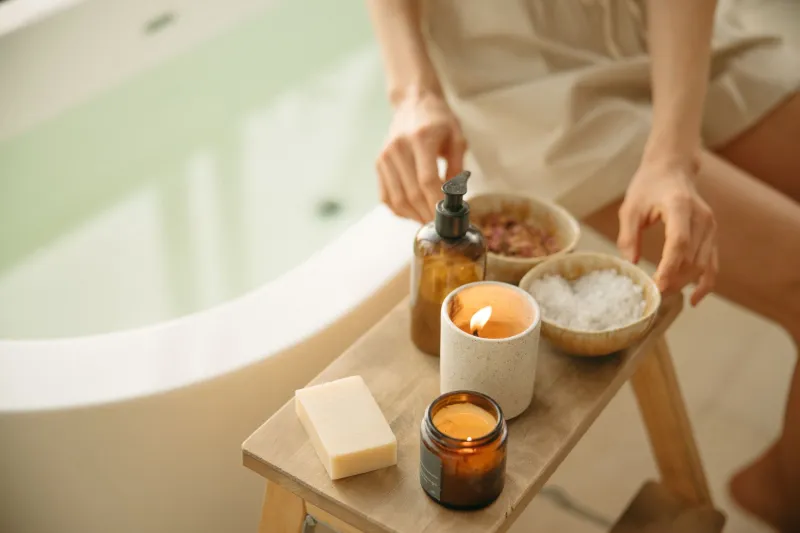
- Controlling your environment as much as possible. Temperature, lighting, and sound all matter. A warm bath with diffused oil in a quiet bathroom will outperform a desk diffuser in a busy room every single time.
- Considering topical application. A diluted essential oil applied during self-massage — even something as simple as a slow foot massage — brings you closer to the multi-sensory experience that makes professional treatments so effective.
- Being consistent. Your brain learns associations over time. The more you pair a specific scent with intentional relaxation, the more powerfully that scent will trigger the response on its own.
The Real Takeaway
That transformative spa experience you had? The lavender was part of it — but only part. The environment, the ritual, the human touch, the permission you gave yourself to fully let go — those were doing at least as much work as anything in the diffuser.
Understanding that isn't a reason to feel cheated by your home practice. It's actually an invitation to build something richer. Because once you know what the real ingredients are, you can start intentionally adding more of them to your everyday routine.
The oil is the starting point. Everything else is what makes it extraordinary.