Home Diffuser vs. Spa Treatment: Honestly, Which One Is Actually Worth It?

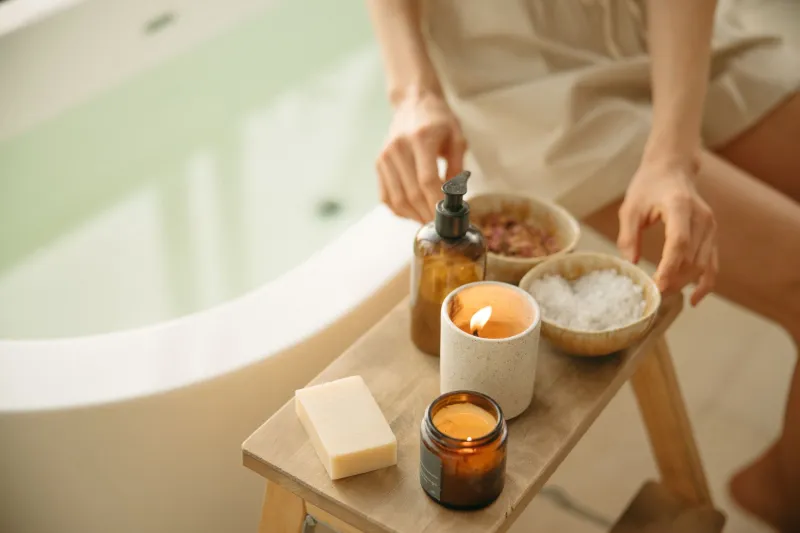
Photo: woman relaxing aromatherapy spa massage treatment room essential oils, via i.pinimg.com
The Question Nobody Wants to Answer Honestly
Let's set the scene. You've invested in a quality ultrasonic diffuser, you've got a solid little collection of lavender, eucalyptus, and bergamot sitting on your shelf, and your bedroom smells genuinely lovely every night. So when a friend raves about a $180 aromatherapy massage she just got at a local spa, you have to wonder — is she paying for something real, or is she just paying for a fancy room and soft music?
Honest answer? Probably both. And that's not the insult to spa treatments it might sound like.
The relationship between professional aromatherapy and the DIY version at home is genuinely complicated. Neither one is automatically better. What matters is understanding what each actually delivers — and what it doesn't.
What a Professional Setting Actually Changes
When you walk into a well-designed spa, something shifts almost immediately. The lighting is warm and intentional. The temperature is controlled. A trained therapist has already chosen a blend based on what you told them you needed that day. Before a single drop of oil touches your skin, your nervous system is already getting signals that it's time to downregulate.
This isn't a gimmick. Environmental design has a measurable impact on how your body responds to therapeutic input. Research on multisensory environments consistently shows that when smell is paired with complementary sensory cues — dim lighting, quiet, comfortable temperature, reduced social demands — the brain processes those inputs differently than it would in isolation.
In other words, lavender in a spa treatment room hits differently than lavender in your living room with the TV on in the background and your phone buzzing every ten minutes. Same molecule. Wildly different context.
Professional therapists also apply essential oils in ways that most people simply don't replicate at home. Carrier oil ratios are carefully calibrated. Massage techniques improve dermal absorption and stimulate circulation in ways that passive diffusion just can't match. When an oil is worked into your skin during a therapeutic massage, you're getting both the aromatic benefits and a physical delivery mechanism that bypasses some of the limitations of inhalation alone.
The Placebo Problem (That Isn't Really a Problem)
Here's where it gets philosophically interesting. Part of what makes a spa treatment feel so effective is expectation. You paid for a premium experience. You've mentally committed to relaxing. A trained professional is giving you their full attention. These aren't incidental details — they're active ingredients.
Placebo effects in wellness contexts are real and measurable. Studies on pain, stress, and even immune markers show that the conditions surrounding a treatment shape its outcomes in significant ways. Some people hear "placebo" and feel cheated, like they've been tricked. But if your cortisol levels genuinely drop, your sleep improves, and your muscles stop aching — does the mechanism behind that really matter?
The honest take is that professional spa aromatherapy likely works through a combination of pharmacological action (the actual chemistry of the essential oils), physiological delivery (massage, heat, absorption), and contextual amplification (the environment, the ritual, the expectation). Strip away any one of those layers, and the effect probably diminishes.
Your home diffuser delivers the first layer. It struggles with the other two.
Where Home Practices Genuinely Hold Their Own
None of this means your at-home aromatherapy routine is a waste of time. Not even close.
Consistency is something a home practice has that spa visits simply can't match for most people. You can diffuse calming blends every single night. You can apply a diluted roller blend to your wrists before a stressful meeting. You can build a morning ritual around a citrus-forward inhale that genuinely signals your brain to shift into alert mode. These repeated, habitual exposures create their own kind of conditioning — your nervous system starts to associate certain scents with certain states, and that association gets stronger over time.
For chronic stress management, sleep support, and mood regulation, a consistent daily home practice may actually outperform the occasional spa visit simply because frequency matters. A single hour of deep relaxation once a month is wonderful. Daily micro-doses of intentional scent work, layered into your existing routines, can quietly rewire your baseline stress response over weeks and months.
The key word there is intentional. Throwing a diffuser on while you scroll through your phone for two hours isn't the same as sitting quietly with a cup of tea, breathing deliberately, and giving the aromatherapy your actual attention for even fifteen minutes.
When the Spa Is Genuinely Worth the Money
There are specific situations where paying for professional aromatherapy treatment makes a lot of sense.
If you're dealing with acute physical tension — the kind that's been building for weeks and has settled into your shoulders and lower back — the combination of therapeutic massage and topically applied essential oils is going to do something a diffuser simply cannot. The physical manipulation matters.
If you're going through a genuinely hard season — grief, burnout, a period of chronic anxiety — the act of being cared for by another person in a safe, intentional space has therapeutic value that home practice can't fully replicate. Human touch and witnessed care are their own medicine.
And if you've never worked with aromatherapy before, a professional session is actually a great starting point. A trained therapist can help you identify which scent profiles resonate with you, explain what they're using and why, and give you a reference experience to build your home practice around.
Building a Practice That Makes Both Work for You
The smartest approach isn't choosing one over the other — it's understanding what each does well and using them accordingly.
Think of professional spa aromatherapy as your reset button. It's the deep intervention you schedule when you need a significant shift, when your body needs hands-on work, or when you want to invest in a truly immersive experience. Plan for it intentionally — maybe once a month, maybe seasonally, whatever fits your life and budget.
Your home practice is the maintenance layer. It's the daily or near-daily ritual that keeps your baseline healthier between those bigger resets. Invest in a quality diffuser, learn proper dilution ratios, and build scent into your existing routines rather than treating it as a separate thing you have to make time for.
And be honest with yourself about what you're actually doing at home. A diffuser running in the background while you stress about your inbox isn't a wellness practice. It's just a nice smell. Intention, attention, and consistency are what transform aromatherapy from ambient decoration into something that genuinely supports your health.
The paradox, it turns out, isn't really a paradox at all. Professional treatments and home practices aren't competing — they're complementary. Each fills in where the other falls short. Use them both well, and you've got something pretty powerful going on.