Why Sticking to the Same Oils Every Day Might Be Quietly Killing Your Practice
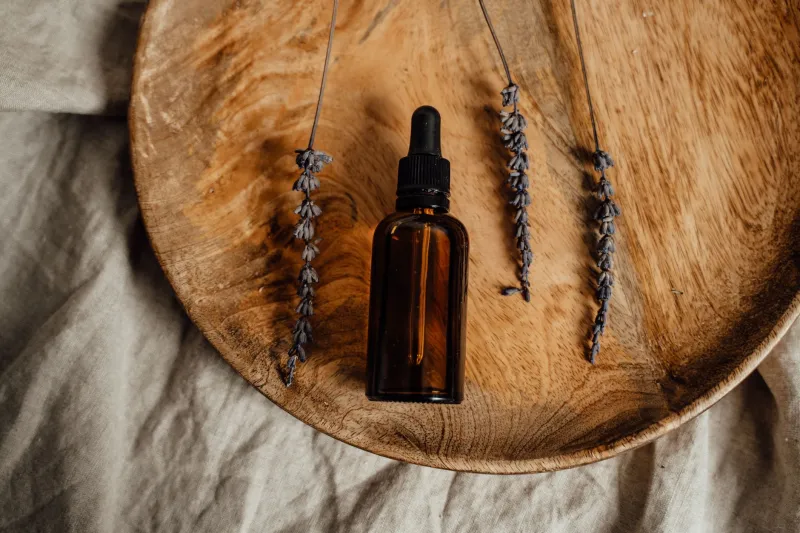
Wellness culture has a consistency problem. Not because routine is bad — it isn't — but because we've collectively decided that sticking to the exact same ritual, every morning, without deviation, is the gold standard of a "serious" practice. You've probably seen it in productivity circles, self-care content, and every journal sold in the checkout aisle at Target: find what works, and repeat it forever.
Here's the thing nobody's saying out loud: when it comes to aromatherapy, that advice can actively work against you.
Your Nose Is Smarter Than Your Routine
The olfactory system is one of the most adaptive sensory systems in the human body. It's wired, evolutionarily speaking, to stop registering smells that are constant and predictable. This is called olfactory adaptation — and it's the same phenomenon that explains why you stop noticing the candle you've been burning for an hour, or why you can't smell your own perfume after twenty minutes.
When you diffuse the same lavender blend every single morning at 7 a.m. before coffee, your brain starts filing that scent under "background noise." It doesn't disappear from your awareness entirely, but its signal strength drops significantly. The calming effect you felt the first week? Your nervous system was genuinely responding to something novel. By week six, it's more habit than healing.
This isn't a failure of the oil. It's a feature of your biology.
The Paradox of the Perfect Routine
There's a specific kind of frustration aromatherapy practitioners — beginners and experienced ones alike — describe after a few months of consistent use. The oils feel flat. The ritual feels mechanical. You're going through the motions, but the thing that made you fall in love with your diffuser in the first place seems to have quietly packed up and left.
Most people assume they need a new oil, a better brand, or a more elaborate protocol. What they actually need is a break.
Rigid consistency, when applied to scent, creates what you might call sensory saturation. Your olfactory receptors have essentially memorized the stimulus. The emotional and physiological responses that originally accompanied that scent — the drop in heart rate, the loosening of tight shoulders, the mental clarity — become increasingly muted because your brain has categorized the smell as routine rather than meaningful.
The fix isn't more. It's less, and then different.
What Productive Inconsistency Actually Looks Like
This isn't a prescription to abandon your practice entirely. It's an invitation to stop treating aromatherapy like a supplement you take at the same time every day and start treating it more like a conversation with your body — one where the response matters as much as the input.
Here are a few ways to build strategic variation into your routine without it feeling chaotic:
Rotate in 10-day cycles. Instead of using one oil blend indefinitely, give each oil or blend a dedicated ten-day window, then step away from it completely for at least two weeks. When you reintroduce it, you'll likely notice the response feels sharper, more immediate.
Let your mood drive the selection. Rather than pre-deciding what you'll use each morning, spend thirty seconds checking in with yourself before you reach for anything. Does your body want something grounding today, or something that lifts? This sounds small, but it shifts aromatherapy from something you do to something you engage with.
Introduce intentional scent-free days. A day or two each week with no diffuser, no scented lotion, no ambient fragrance gives your olfactory system a genuine reset. This can feel counterintuitive — especially if your diffuser has become part of your morning comfort ritual — but the contrast makes the next scented experience noticeably more potent.
Swap categories, not just scents. If you've been living in florals and herbals, move temporarily into resins or woods. Frankincense and cedarwood engage different receptor pathways than lavender and chamomile. Cross-category variation keeps more of your sensory landscape active.
The Deeper Issue: Performance vs. Practice
Some of the rigidity around aromatherapy consistency comes from a very human place — the desire to do wellness correctly. There's an implicit pressure, especially in online wellness spaces, to have a curated, optimized routine that you execute flawlessly. The ten-step morning ritual. The color-coded oil cabinet. The before-and-after transformation narrative.
But healing — real, embodied, nervous-system-level healing — doesn't operate on a content calendar. It's responsive. It shifts. It sometimes needs you to do nothing at all.
When you let go of the idea that your aromatherapy practice needs to look the same every day to be legitimate, something interesting happens: you start noticing what you actually need, rather than what you've decided you should need. That's not inconsistency. That's attunement.
A Practical Starting Point
If you're reading this and realizing your practice has gone a little flat, here's a low-stakes way to start:
Pick your most-used oil. Set it aside for two weeks. During that time, use something completely different — ideally from a scent family you don't gravitate toward naturally. At the end of those two weeks, come back to your original oil with fresh receptors and see what happens.
Most people are surprised. The effect they thought they'd lost comes back — sometimes stronger than the first time they used it.
Your practice isn't broken. It's just been too consistent. Give it some room to breathe, and it'll give something back.