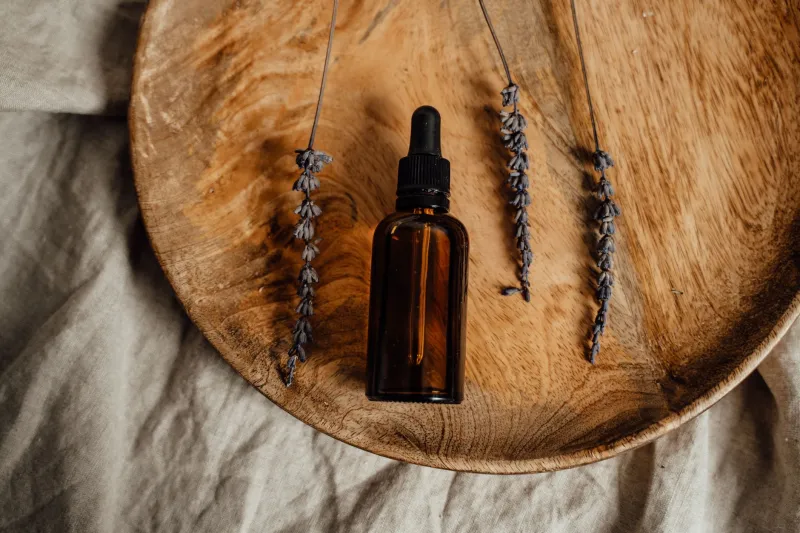
You Don't Have to Be a Spa Person for Aromatherapy to Actually Work for You
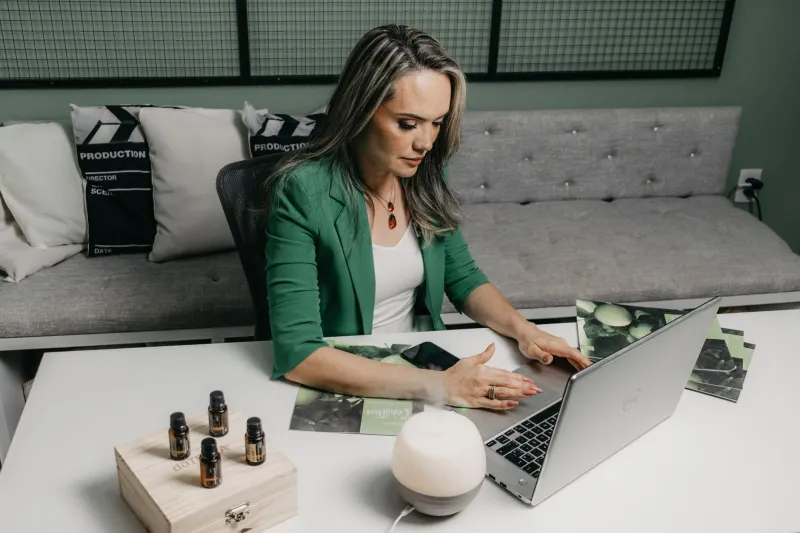
Let's be upfront about something: a lot of aromatherapy content is not written for you. It's written for someone who has a morning routine that lasts longer than eleven minutes, a linen closet organized by season, and the kind of weekend schedule that includes the phrase "intentional rest." If that's not your life — if you're more likely to eat lunch at your desk and consider a full night's sleep a personal victory — the wellness industry has mostly given up on you.
That's a mistake, because the actual science of how scent affects the human brain doesn't care whether you've bought into spa culture.
Here's What's Actually Happening in Your Brain
The olfactory system is the only sensory system with a direct pathway to the limbic system — the part of your brain that processes emotion, stress response, and memory. When you smell something, the signal bypasses the thalamus (the brain's usual sensory relay station) and lands almost immediately in regions associated with emotional regulation and autonomic nervous system function.
What that means in plain terms: scent can shift your physiological state faster than almost any other input. Faster than music. Faster than a breathing exercise. In some contexts, faster than a cup of coffee.
You don't have to believe in aromatherapy for this to happen. The pathway exists whether you're a skeptic or a devotee. Your limbic system is not interested in your opinions about wellness culture.
The Practical Problem With Most Aromatherapy Advice
The gap between "scent affects your nervous system" and "set up a dedicated ritual space and diffuse for thirty minutes each evening" is enormous, and most aromatherapy content lives in that gap without acknowledging it.
For busy Americans — and the data consistently shows Americans are among the most overworked, sleep-deprived, and chronically stressed populations in the developed world — adding another structured practice to the day isn't just inconvenient. It's genuinely counterproductive. When relaxation becomes a task, the stress of doing it wrong cancels out the benefit of doing it at all.
The good news: the useful applications of aromatherapy for practical, skeptical, time-strapped people require almost none of the infrastructure the wellness industry tries to sell you.
Four Real-Life Applications That Don't Require a Ritual
1. Anchoring focus during work transitions. One of the more underappreciated applications of scent is its ability to serve as a cognitive anchor. When you consistently associate a particular smell with a specific mental state — focused work, for instance — that scent can eventually help trigger that state more quickly. This is classical conditioning applied to productivity, and it doesn't require any belief in the process.
Practically: keep a small personal inhaler with peppermint or rosemary at your desk. When you sit down to start a focused work block, take two or three slow breaths from it. Do this consistently for a few weeks and you'll likely find the transition into concentration becomes faster. The scent becomes a shortcut your brain learns to follow.
2. Reducing decision fatigue at the end of the day. Decision fatigue is real and it compounds throughout the day. By 6 p.m., even small choices — what to cook, whether to respond to that email, how to handle a minor conflict — feel disproportionately hard. Scent can serve as a neurological gear shift between "work brain" and "home brain."
A drop of lavender or vetiver on your wrists during your commute home, or diffused in the car, creates a sensory boundary between the two modes. You're not meditating. You're just giving your nervous system a clear signal that the decision-making sprint is over.
3. Creating micro-rest moments. Research on cognitive restoration consistently finds that even very brief mental breaks — two to five minutes — meaningfully restore attention and reduce error rates. The problem is most people don't take them, or they reach for their phone, which isn't actually restorative.
A small inhaler in your pocket or desk drawer gives you a two-minute reset that doesn't involve screens. Breathe slowly, smell something grounding or uplifting depending on what you need, and let your mind go quiet for a moment. That's it. No app required.
4. Sleep onset support. If your nighttime routine currently consists of staring at your phone until your eyes close, you're not alone — and you're also probably not sleeping as well as you could be. Lavender's effect on sleep onset has been studied more extensively than almost any other aromatic compound, and the results are reasonably consistent: it reduces the time it takes to fall asleep and can improve sleep quality, particularly in people who are anxious or stressed.
You don't need a diffuser. A few drops on your pillowcase or a quick inhale before you put your phone down is enough to introduce the signal. Your brain will start associating it with sleep relatively quickly.
The One Thing Skeptics Usually Get Wrong
The most common objection to aromatherapy from pragmatic, evidence-minded people is that it's too subjective — that any benefit is just placebo. This objection is worth taking seriously, but it misunderstands what placebo actually means.
Placebo effects are real physiological effects. The expectation of relief triggers genuine neurochemical responses. Even if some portion of aromatherapy's benefit operates through expectation and conditioning, the downstream effect on your nervous system is still real. Your cortisol levels don't know whether you're a believer or a skeptic.
Beyond that, the direct neurological pathway between olfactory input and the autonomic nervous system exists independent of belief. You can be entirely unconvinced that aromatherapy is doing anything and still experience a measurable shift in heart rate variability after inhaling certain compounds. The mechanism doesn't require your endorsement.
What You Actually Need to Get Started
One small bottle. Lavender if you want something versatile. Peppermint if you want something that sharpens rather than softens. A personal inhaler (they cost less than five dollars and fit in a shirt pocket) if you don't want to deal with a diffuser.
That's the entire barrier to entry. You don't need a practice. You don't need a ritual. You don't need to identify as a wellness person or change anything else about how you live.
You just need five minutes and a willingness to find out whether your nervous system responds — which, biology being what it is, it almost certainly will.